 OUTFIT
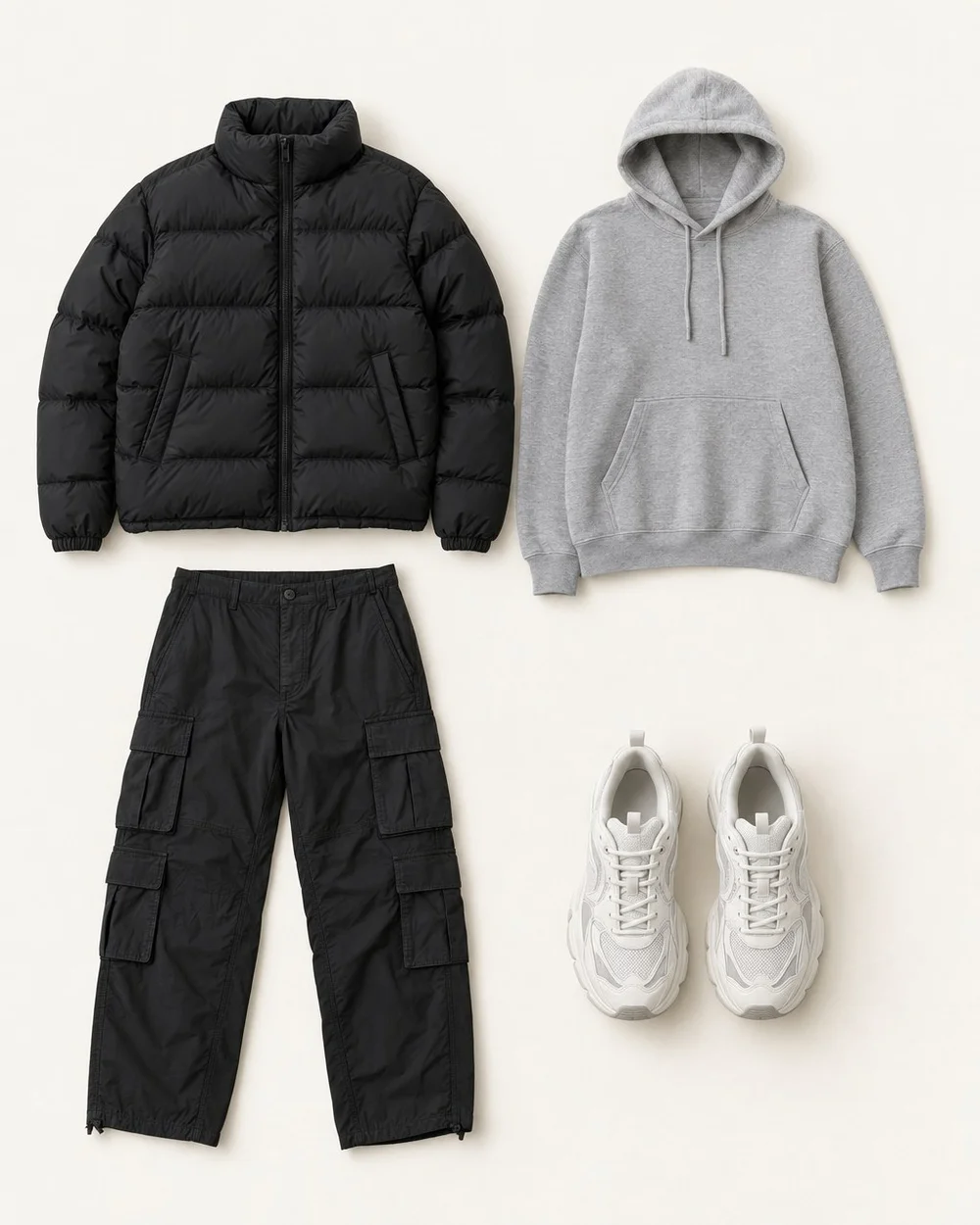
A camera roll can contain plenty of outfit inspiration and still be difficult to use at seven in the morning. The missing element is often context. A photo shows what you wore, but a short note explains whether the shoes survived a long walk or the layer stayed on all day.
Give each album a practical job
Start with a small number of situations that genuinely recur: work, everyday errands, occasions, or travel. If your photo tool supports multiple albums, one image can belong to more than one useful group. Otherwise, a single outfit album and descriptive notes can be enough.
Keep outside inspiration apart from your own tested outfits. A saved image of someone else’s clothes suggests a direction; your outfit reference should show what you can actually assemble. This distinction avoids treating an attractive idea as a ready option when its key pieces are missing.
Use names and notes that survive the moment
A label such as “Tuesday look” may mean nothing a month later. “Navy trousers, striped shirt, rainy commute” identifies both the combination and its setting. You do not need to describe everything visible in the image. Record what the photograph cannot tell you.
For example, “comfortable seated; jacket too warm indoors; swap to cotton cardigan” contains a useful lesson. Keep the observation specific to that wear rather than declaring the whole outfit permanently good or bad.
| Detail | Example |
|---|---|
| Setting | Office day with a client lunch |
| Conditions | Cool commute, warm meeting room |
| Result | Shoes comfortable; sleeves needed adjusting |
| Next change | Try shorter-sleeved top under the jacket |
Swipe or scroll to read the full table.
Separate a tested outfit from a draft
An outfit laid on the bed is a useful draft, but it does not prove that the pieces work together while moving. Mark it as an idea until you have tried it on or worn it. A quick mirror photo can then document the actual combination, including the shoes and outer layer if relevant.
If several photographs capture the same outfit, retain the one that best shows the pieces. You can keep a second detail shot when it explains a tuck, cuff, or fastening. A smaller collection of readable examples is easier to scan than a burst of nearly identical images.
Review for usefulness, not visual perfection
Before a familiar event, look for a photo from a similar situation. Check whether the garments are available and whether the conditions have changed. A successful summer office outfit may need a different outer layer for a cold commute.
When a key piece leaves your wardrobe, annotate the old image or move it to an archive. It may still inspire a formula, but it should not appear to be an immediately available outfit. Review personal background details before sharing images beyond your own collection.
- Keep complete outfits visible where practical.
- Mark ideas, tried-on combinations, and worn successes distinctly.
- Write one useful comfort or context observation.
- Archive outdated options without erasing lessons you still use.
Common questions.
How many outfit photos should I keep?
There is no target number. Keep enough distinct options to cover the situations you want help with. If you always choose from the same few images, give those a favorites group. Remove redundant shots when they slow retrieval, rather than deleting a useful record to meet a number.
Can I organize outfit references without photographing myself?
Yes. Photograph the garments arranged together, write a list of their names, or create a simple reference board. Add notes after wearing the outfit so the record captures practical experience. A self-portrait is optional; the important information is which pieces worked and under what conditions.
Put your wardrobe to work.
Outfit Maker brings your own clothes, useful combinations and everyday plans together. Made for iPhone.
See how outfit planning works