 OUTFIT
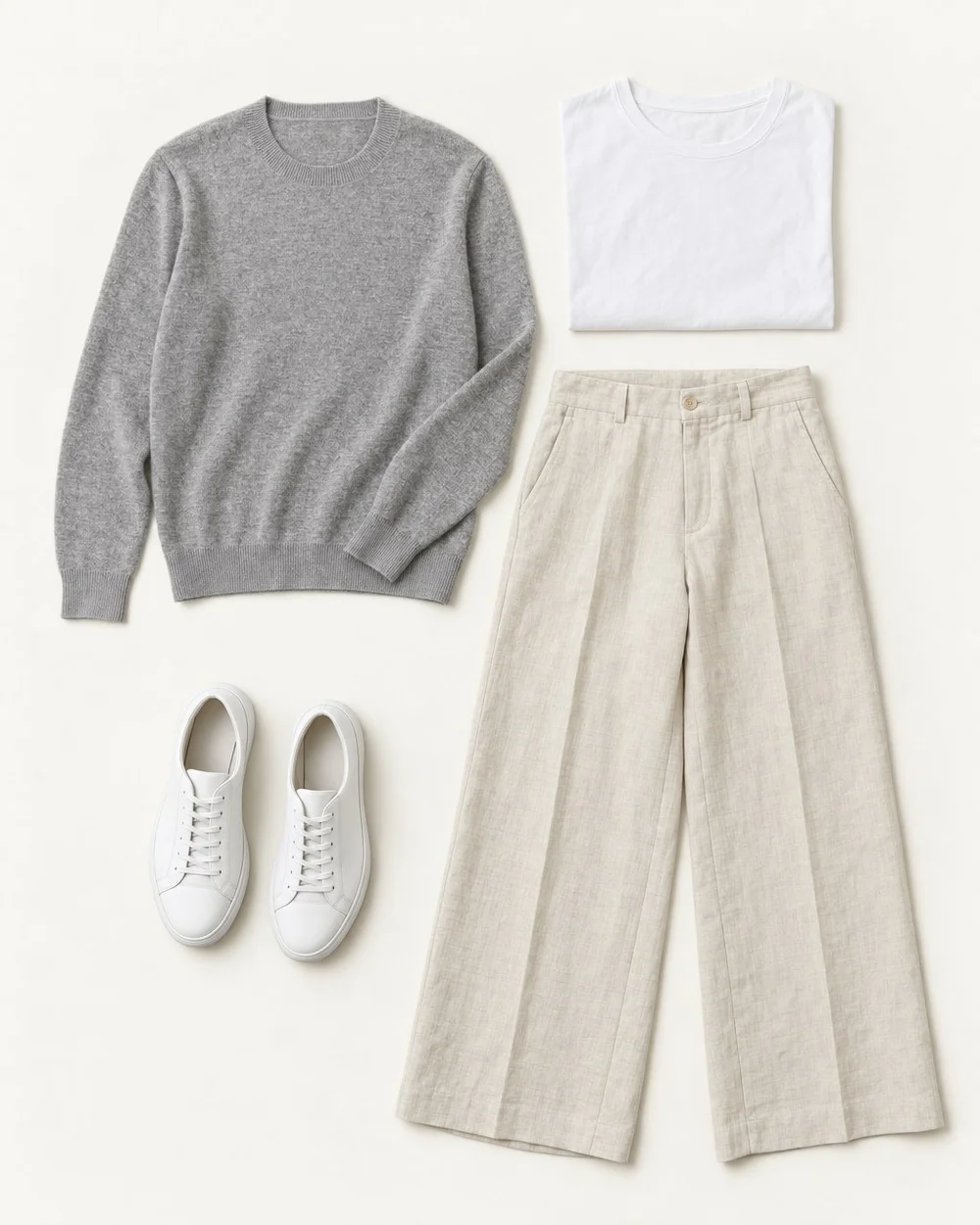
An outfit can feel suddenly less appealing once it has appeared in a photo or at the office. That feeling does not tell you whether the clothes still work. Separating social discomfort from practical issues makes it easier to enjoy familiar combinations without turning every morning into a styling exercise.
Name what makes the repeat uncomfortable
Ask whether the concern is cleanliness, appropriateness, boredom, or other people's reactions. Each calls for a different response. A shirt that needs washing needs care, while an outfit that feels monotonous may need a different styling detail. Worry about a photo does not require replacing otherwise useful clothing.
You cannot control what every person notices. You can decide that comfort, a coherent appearance, and using what you own are reasonable priorities for your own wardrobe.
Distinguish an outfit repeat from consecutive garment wear
Repeating a combination does not mean wearing every piece again immediately. Some items may be ready after airing and inspection; others need laundering after one wear. Follow care labels and consider odor, visible soil, heat, and activity. Give footwear time to dry when needed.
Photograph the full combination once, then wear it again when all its parts are ready. This preserves the useful styling decision without creating an arbitrary wear schedule for individual garments.
Choose a repeat level that feels natural
There are several ways to reuse a successful look. None is inherently more stylish. Start with the option that feels comfortable, then notice whether a more complicated variation actually improves the outfit.
| Approach | Example | Reason to choose it |
|---|---|---|
| Exact repeat | Same charcoal trousers, striped shirt, loafers | The combination fits the same kind of day |
| Same base, useful change | Same trousers and shirt with a raincoat | The weather has changed |
| Same formula, other pieces | Olive trousers, solid shirt, similar shoes | The original shirt is in the laundry |
Swipe or scroll to read the full table.
Give familiar outfits a recognizable role
Choose two or three looks you would happily wear in recurring situations: a long commute, a low-key dinner, a day of errands. Name them by purpose in a note or photo album. A “walking dinner” outfit earns its place because it supports both activities, not because nobody has seen it before.
For a concrete example, straight jeans, a dark knit, a textured jacket, and comfortable boots can return for several casual dinners. Change the jacket only if the venue, weather, or your preference calls for it.
Handle photos and comments without overcorrecting
For photos you care about, you can deliberately repeat a look you like, or change the part most visible in the frame. Neither requires a new purchase. If someone comments, a simple “I like this outfit” is a complete answer. You do not owe an explanation of your wardrobe budget or habits.
If repetition truly bores you, keep the reliable base and experiment on a day with fewer demands. That protects the usefulness of the outfit while making room for play.
Common questions.
How often is it acceptable to repeat an outfit at work?
There is no universal interval. Workplace expectations, garment condition, and your own preferences matter more than a fixed count. If the outfit meets the relevant expectations and its pieces are ready to wear, repetition alone does not make it inappropriate.
Do I need accessories to make a repeated outfit look different?
No. Accessories are optional, and adding them solely to conceal a repeat can create more work. Use a belt, scarf, or jewelry when you enjoy the result or it serves a purpose. Keeping a look exactly the same is also a valid choice.
Put your wardrobe to work.
Outfit Maker brings your own clothes, useful combinations and everyday plans together. Made for iPhone.
See how outfit planning works