 OUTFIT
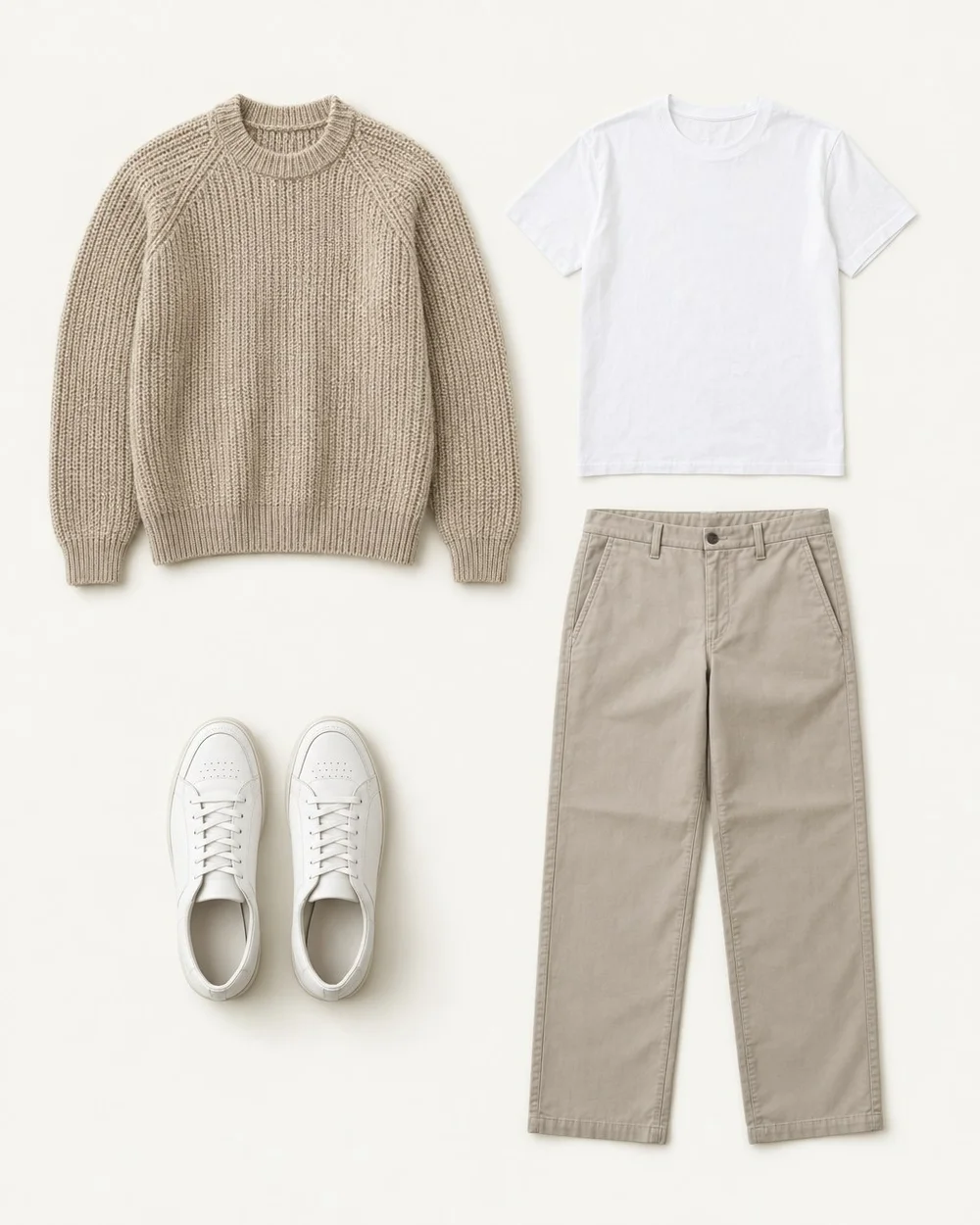
A mirror photo records appearance, but it cannot tell you that a sleeve slipped into your lunch or that your shoes became uncomfortable on the walk home. A helpful outfit log connects the combination to its real use. That makes it easier to repeat successes and change the specific parts that failed.
Choose the smallest format you can maintain
Use the place where you will naturally return to the information. A photo album suits visual recall; a note works when garment names are enough; a spreadsheet makes filtering easier. Start with one format rather than maintaining all three. If photographs feel intrusive or inconvenient, written records are completely valid.
Use names that distinguish your own pieces, such as “ribbed green cardigan” rather than “top.” You do not need a complete clothing inventory to begin logging outfits.
Capture the day in four fields
Record context that could explain the result, then write a concrete observation. “Not good” leaves nothing to act on. “Collar felt bulky under coat” suggests a useful change next time. Avoid giving your body a score; evaluate the clothing and combination instead.
| Field | Example |
|---|---|
| Date and activity | Tuesday; train commute and office |
| Pieces | Wide trousers, striped shirt, cropped cardigan, loafers |
| Conditions | Cool morning; warm meeting room |
| Observation | Cardigan worked off and on; trouser hem touched wet ground |
Swipe or scroll to read the full table.
Add the observation after living in the outfit
Take a photo when convenient, but write the performance note later. Think about sitting, carrying a bag, walking, temperature changes, and the amount of adjusting you did. A single sentence is enough. If the outfit worked smoothly, say why: “Comfortable on train; easy layer to remove” is worth keeping.
Do not reconstruct missed days unless you want the information. A partial record of memorable outfits can still be useful. The aim is practical recall, not an unbroken streak.
Review combinations before judging individual pieces
When a problem repeats, compare the contexts. A jacket that feels tight over a thick sweater may work over a thin shirt. Shoes that work for a short dinner may be unsuitable for a walking commute. Keep those limits in the record instead of immediately labeling the item a failure.
For example, if the same trousers drag with loafers but clear the ground with boots, save the boot combination and flag the hem issue. The log has identified a pairing constraint, not a reason to replace the whole outfit.
Turn useful entries into a short outfit menu
After you have several entries, mark the combinations you would willingly repeat. Group them by situations you actually encounter, such as “long walking day” or “camera meeting.” Keep experiments separate from dependable choices so your next rushed morning does not become another test.
Delete unnecessary detail if logging starts to feel like administration. Keep the pieces, context, and result. Those three ideas are enough to turn a past outfit into a practical option for a future day.
Common questions.
Do I have to log every garment, including underwear?
Only if it explains a useful issue, such as a neckline or fabric transparency. Otherwise, record the visible pieces and shoes. Keep any sensitive notes or photos in a place you are comfortable storing them, with access settings suited to your preferences.
Can an outfit log tell me what clothes to get rid of?
It can identify candidates to examine, but missing entries do not prove an item is unnecessary. Occasionwear and seasonal pieces may rarely appear. Use the log alongside fit, condition, upcoming needs, and your preferences before making a separate decluttering decision.
Put your wardrobe to work.
Outfit Maker brings your own clothes, useful combinations and everyday plans together. Made for iPhone.
See how outfit planning works