 OUTFIT
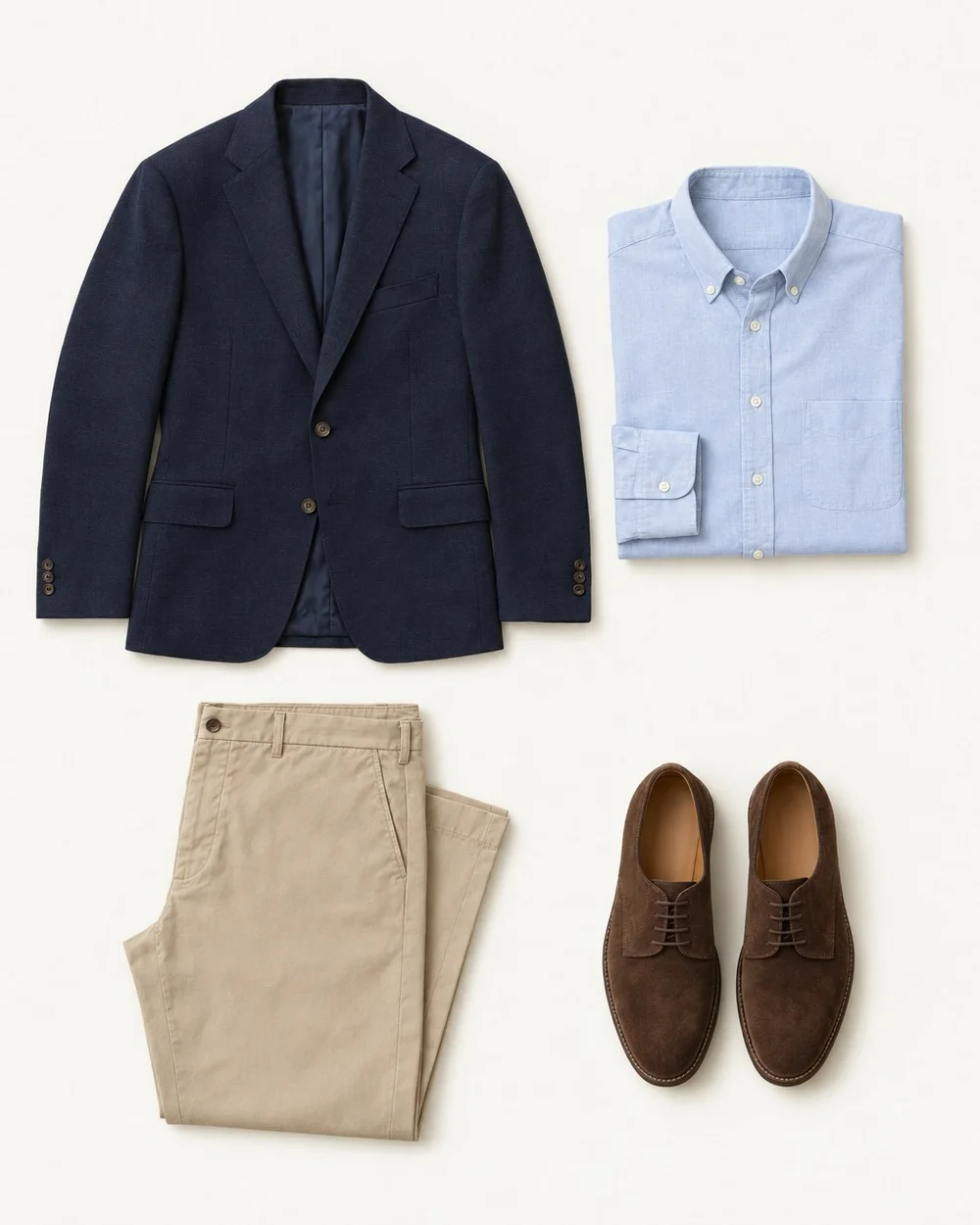
Jeans and a blazer can connect casual and more structured pieces without requiring a complete change of wardrobe. The combination becomes easier when you stop treating either item as a uniform category. Dark straight jeans and faded loose jeans behave differently, just as a soft jacket differs from a sharply tailored blazer.
Check the blazer with the layer underneath
Try the blazer over the top you plan to wear, then reach forward, sit, and lift your arms comfortably. A jacket that fits over a thin T-shirt may feel restrictive over a sweater. Check the shoulders, sleeve room, and whether the front pulls when you close it.
Wearing a blazer open is a valid styling choice, but it should not hide an uncomfortable fit. If your preferred knit is too bulky, choose a thinner top or a different jacket you already own. Compare the jean waistband with the blazer hem too: overlapping pockets, belts, and jacket buttons can create an area you keep adjusting.
Use three combinations for three contexts
Separate the setting from the formula. The work version below is appropriate only where denim is permitted; the dinner version assumes an informal venue.
| Context | Base outfit | Finishing choice |
|---|---|---|
| Casual work | Dark jeans, shirt, soft blazer | Loafers and a practical work bag |
| Weekend | Relaxed jeans, T-shirt, blazer | Comfortable sneakers |
| Informal dinner | Black jeans, fine knit, blazer | Boots or familiar dressier flats |
Swipe or scroll to read the full table.
Keep the jeans relevant to the occasion
Cleanliness and condition affect the overall outfit. Check visible wear, loose hems, and marks before planning jeans for an occasion where presentation matters. That does not mean faded or distressed denim is inherently wrong; it means the choice should be intentional and suitable for the people and place involved.
For example, take dark blue straight jeans, a white T-shirt, a charcoal blazer, and brown loafers. For a relaxed afternoon, turn back the sleeves if the jacket allows it comfortably. For dinner, wear the sleeves normally and change the T-shirt for a fine cream knit. Notice how little else needs to change when the base pieces already work together.
Photograph the version you will actually wear
A standing photo can conceal a waistband that pinches or a blazer that rides up when you sit. Test the outfit with your normal bag, outer coat, and commute. Check that the layers do not restrict your arms and that the shoes suit any walking involved.
Save the top and shoes with the outfit rather than logging only jeans plus blazer. Those companions make the formula repeatable. Add a short context note such as casual office, dinner with a short walk, or weekend errands. You can then reuse the successful version without expecting one combination to cover every level of formality.
Common questions.
Are jeans and a blazer business casual?
In some workplaces, yes; in others, jeans are excluded. Check your employer’s guidance, event details, or ask an organizer. A blazer changes the overall appearance but does not override a stated dress code. Keep a non-denim alternative ready when expectations are uncertain.
Can I wear a loose blazer with loose jeans?
Yes, if you enjoy the silhouette and can move comfortably. Try a simpler underlayer or repeated color to connect the pieces. Check the jacket’s sleeve length and the jeans’ hem rather than assuming two loose items must be balanced by something fitted.
Put your wardrobe to work.
Outfit Maker brings your own clothes, useful combinations and everyday plans together. Made for iPhone.
See how outfit planning works