 OUTFIT
A plain tee and trousers can be a good starting point for several settings, but “dressier” needs a destination. A casual dinner, a client meeting, and a wedding have different requirements. Start with the actual occasion so you can decide whether a small adjustment is enough or the base outfit needs to change.
Make sure the base can reach the required level
Read any stated dress code and consider what you know about the setting. If formal attire is required, accessories may not make a very casual base appropriate. For less formal occasions, inspect the garments themselves: visible wear, wrinkling, stretched edges, and distracting fit problems can affect the finished impression.
Handle care according to each label. A repair, clean pair of shoes, or pressed collar may do more for the outfit than an additional accessory.
Find the highest-impact change
Look at the outfit and ask what currently makes it feel casual. It may be the shoe, the relaxed fabric of the top, or the lack of a defined outer layer. Change that element first, using an option whose comfort and condition you know.
| Starting point | Change to try | Effect to assess |
|---|---|---|
| Tee and straight trousers | Add a well-fitting jacket | More structure around the shoulders and torso |
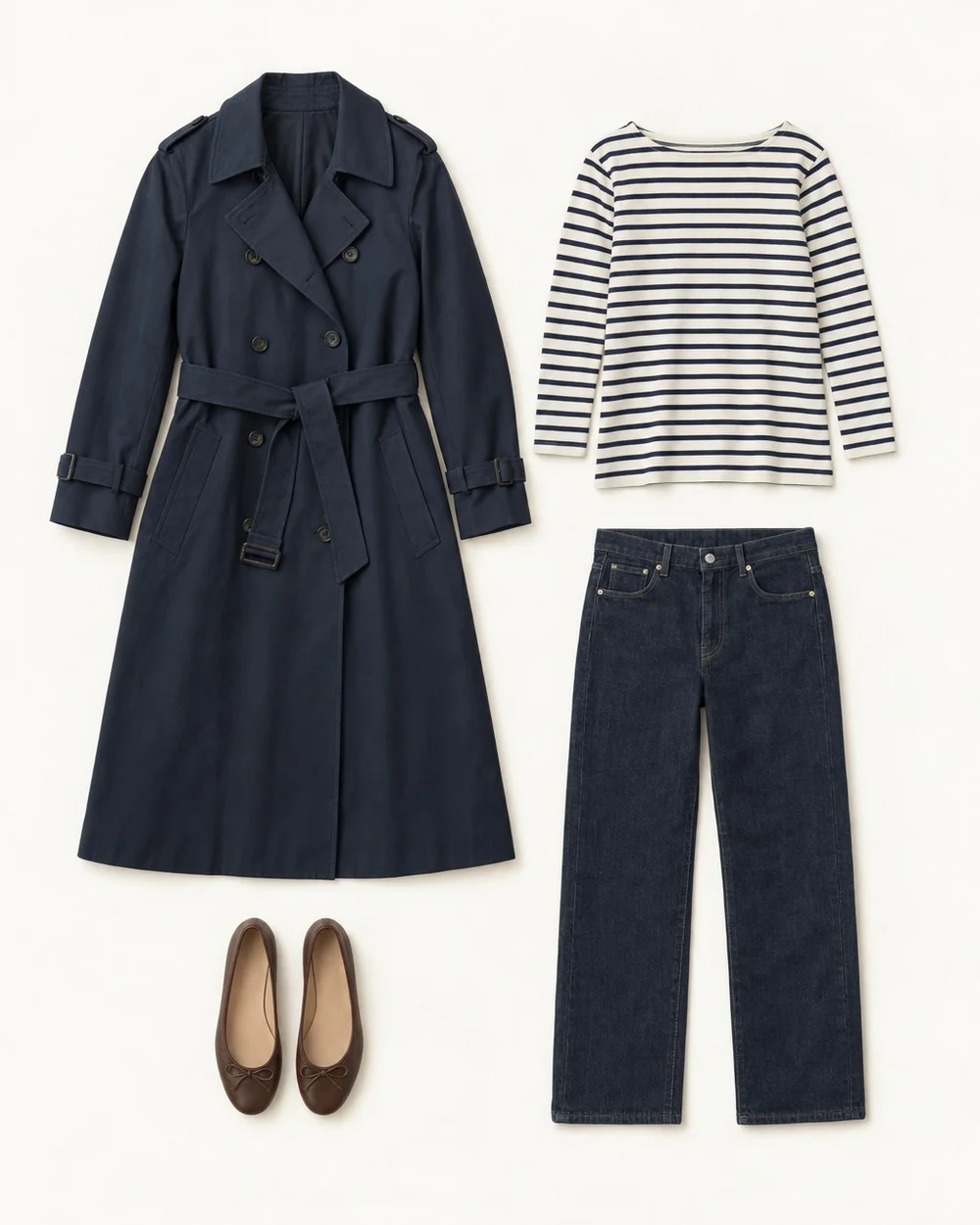
| Shirt and dark jeans | Swap casual shoes for polished flats or loafers | A more deliberate finish if suitable for the occasion |
| Simple dress | Add a refined layer and small accessory | A clearer evening or gathering context |
| Knit and skirt | Adjust the hem relationship or tuck | A tidier outline without adding more pieces |
Swipe or scroll to read the full table.
Use details to connect the outfit
Choose one or two details that seem at home with the clothes. A belt can define where pieces meet, a necklace can work with a neckline, and a bag can reinforce the outfit's level of formality. None is compulsory. Add a detail because it improves the result, then look again.
Avoid assuming that more shine or more matching automatically looks more polished. A quiet outfit may feel complete with clean lines and well-maintained shoes alone.
Work through one everyday example
Start with a plain dark tee, straight trousers, and familiar sneakers. For a casual restaurant, you might keep the trousers, smooth the tee's hem with a tuck you find comfortable, add an unstructured jacket, and choose clean loafers. If the loafers hurt, use another comfortable shoe that suits the venue instead of sacrificing the whole evening.
Now check the jacket off as well as on. If the dining room is warm, the base still needs to feel appropriate. Consider the bag and outerwear you will actually carry, rather than judging only the mirror version.
Finish with a movement and maintenance check
Sit down, reach, and walk in the finished outfit. Make sure the tucked fabric stays comfortable, the layer does not pull, and accessories do not interfere with your activity. A look that requires constant fixing may feel less composed in use than a simpler version.
- Remove lint and check visible marks.
- Confirm that shoes are ready and comfortable.
- Try the outfit with the layer removed.
- Keep only accessories that improve or serve the look.
- Pack what the occasion requires without overloading pockets.
Common questions.
Can sneakers look dressed up?
Clean, well-kept sneakers can work in some casual and smart-casual settings, especially with more structured clothing. They do not meet every dress code. Check the setting first, then consider the whole outfit and the condition of the shoes rather than relying on a blanket rule.
Do I need heels to make an outfit dressier?
No. Depending on the occasion, flats, loafers, boots, and other comfortable shoes may be suitable. Shape, material, condition, and how they work with the garments all matter. Choose a pair that supports the activity and any stated requirements.
Put your wardrobe to work.
Outfit Maker brings your own clothes, useful combinations and everyday plans together. Made for iPhone.
Meet your personal AI stylist