 OUTFIT
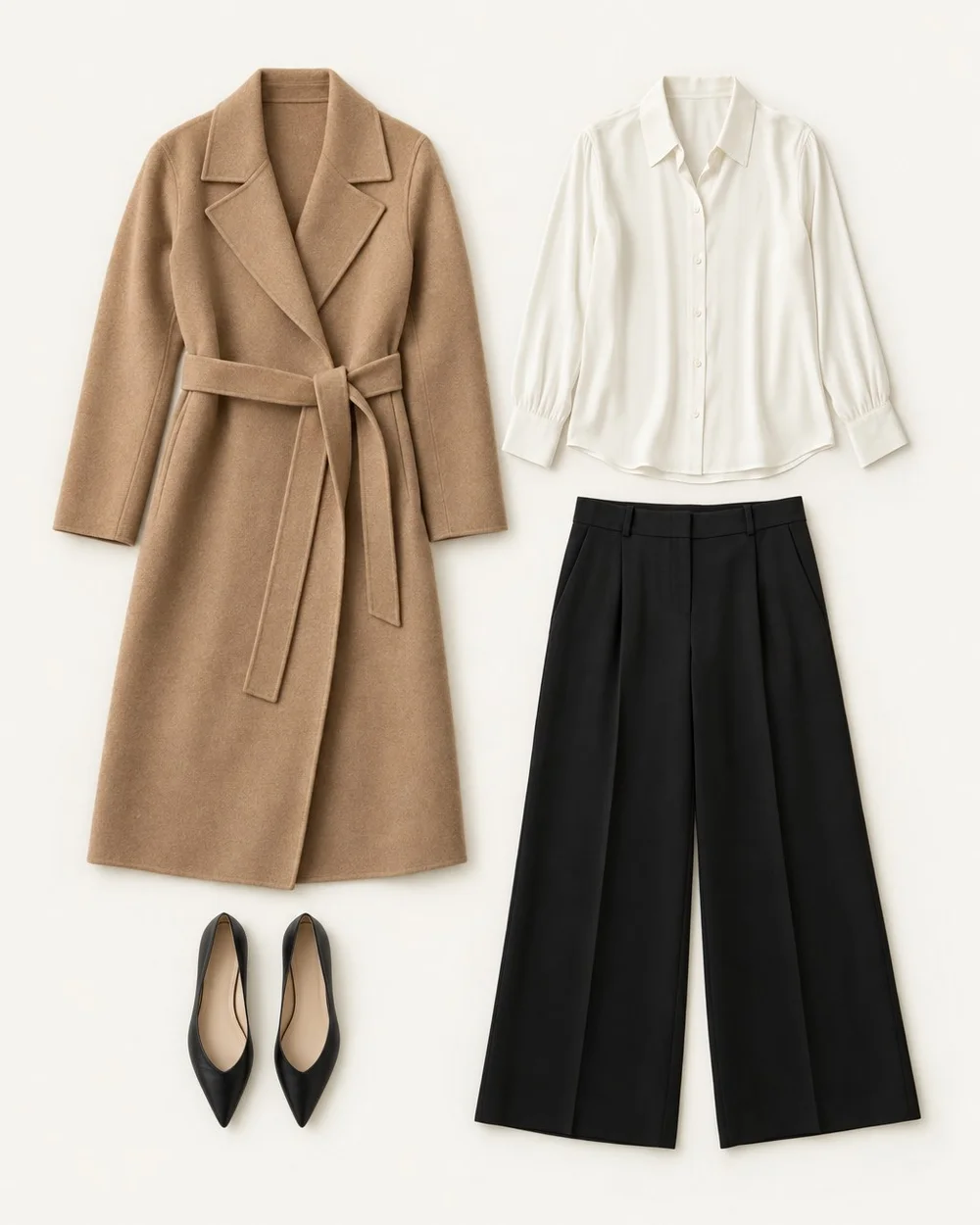
The difficult part of dressing for work and dinner is rarely a lack of accessories. It is choosing a base that can handle a full workday and still suit the evening. Start with the more demanding setting, then decide whether the other part of the day can be covered by a simple adjustment.
Find the overlap between the two settings
Check the dinner venue or invitation for any stated requirements, and compare them with your workplace norms. An ordinary restaurant after a casual office day may allow the same outfit throughout. A formal dinner after a relaxed workday may require a more substantial change.
Include the activity around the meal. A long walk, outdoor seating, or standing at a reception can matter more to your comfort than whether a top feels especially evening-like.
Choose a base that stays comfortable all day
Start with familiar garments that tolerate sitting, walking, and the likely temperature changes. Test the outfit with its work layer removed; the uncovered version should be intentional and suitable too. If you rely on the jacket to conceal a comfort or coverage problem, it is not an easy transition.
A simple dress, or a top with trousers or a skirt, can all work depending on the settings. There is no single silhouette required for an office-to-dinner outfit.
Make the change solve something specific
Decide what needs to shift, then choose the smallest useful intervention. More formal footwear may help with one venue, while a different layer may matter more for outdoor dinner. Adding jewelry does not solve a dress-code mismatch, and uncomfortable shoes do not improve an evening spent walking.
| Evening plan | Possible adjustment | What to keep in mind |
|---|---|---|
| Casual meal near the office | No change, or remove work layer | Check evening temperature before leaving the layer behind |
| Dressier restaurant | Swap a casual layer or shoe if needed | Confirm the base already fits the venue |
| Outdoor dinner | Add a warmer layer | Warmth may matter more than decorative changes |
| Dinner after a walking commute | Keep comfortable shoes or change at arrival | Carry and store any spare pair realistically |
Swipe or scroll to read the full table.
Work through a realistic bag-sized example
Suppose your office allows dark jeans, a neat shirt, and loafers, and dinner is at an informal restaurant. Wear those pieces with a cardigan during the day. You might remove the cardigan and add a small accessory for dinner, but you could equally keep the outfit unchanged.
If dinner instead requires a dressier outfit, start the day in suitable trousers and a more polished layer. That may be easier than carrying a full change. Compare the inconvenience of wearing the dressier option at work with the inconvenience of changing later.
Prepare the transition before leaving home
Put any chosen extra item in the bag you will actually carry, then check weight and space. Include a practical way to carry removed pieces. Inspect the outfit for marks before heading to dinner, and make only the adjustments that help.
- Check the restaurant or event requirements.
- Try the base with the work layer removed.
- Plan footwear for the full walking distance.
- Make room for any swapped item in your bag.
- Check the return journey and evening weather.
Common questions.
Do I need a smaller evening bag?
No. Use a bag that fits the venue and what you need to carry. A second bag can be convenient if you can securely leave work belongings elsewhere, but it is not required to make the outfit appropriate. Plan storage before bringing multiple bags.
What if dinner is much more formal than my office?
Build the day around the more formal outfit if it is comfortable and acceptable at work, or arrange a genuine change of clothes with time and a suitable place to change. A small accessory swap cannot reliably bridge every difference in dress expectations.
Put your wardrobe to work.
Outfit Maker brings your own clothes, useful combinations and everyday plans together. Made for iPhone.
See how outfit planning works