 OUTFIT
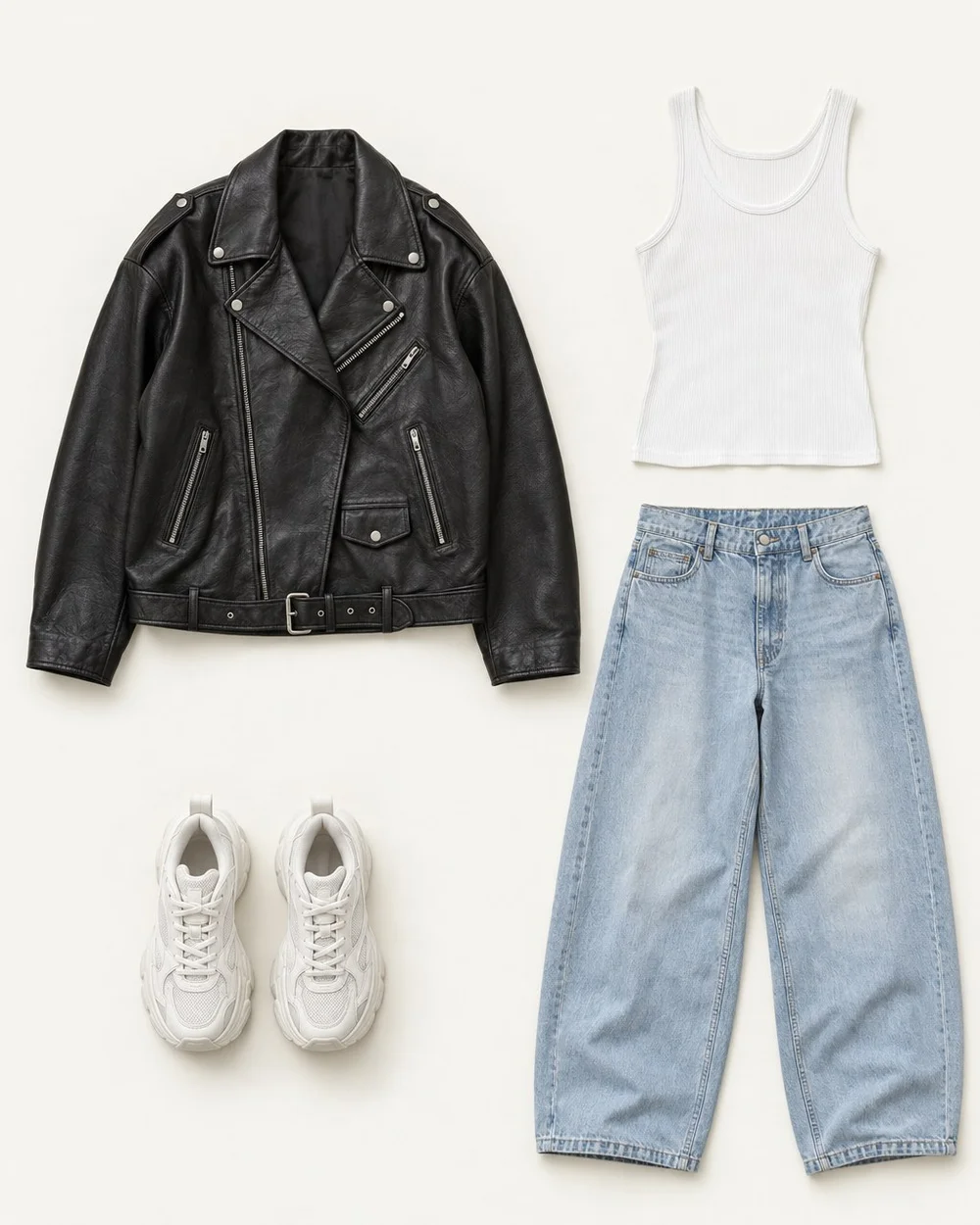
Words such as classic, edgy, or effortless can mean different things to different people and systems. They can still be useful shorthand, but a strong styling request explains what those words mean to you. Concrete details make a suggestion easier to evaluate and give you a clearer way to ask for changes.
Translate style labels into visible choices
Instead of stopping at “minimal,” describe simple layers, few accessories, and a preference for solid colors. Instead of “creative,” mention the prints, color contrasts, or unusual pairings you actually like. The goal is not to find the perfect aesthetic category; it is to make your preferences understandable.
Use examples from your own wardrobe. “I like my loose blue shirt with straight black trousers, but I rarely wear fitted tops” supplies both a positive reference and a boundary. Avoid broad self-criticism or body judgments when a garment preference explains the issue more clearly.
Include the day and the nonnegotiables
State the occasion, required level of formality, and practical activities. Include relevant weather conditions yourself if needed rather than assuming the tool knows them. Comfort preferences such as flat shoes, an adjustable layer, or room to move can change the recommendation substantially.
Keep personal detail proportionate to the task. “Dinner after a walking commute” conveys useful context without identifying a location or another person. Do not include private information merely to make the request sound more complete.
| Input | Example |
|---|---|
| Anchor piece | Use my navy wide-leg trousers |
| Situation | A casual team dinner after work |
| Practical need | Comfortable for a twenty-minute walk |
| Preference | Simple layers, a little color, flat shoes |
| Boundary | No new purchases and no fitted top |
Swipe or scroll to read the full table.
Ask for alternatives you can compare
A limited set of options is easier to judge than a long list. Ask for two outfits that differ in a meaningful way, such as one more relaxed and one more polished. If the tool works with an inventory, ask it to use identifiable pieces from that collection. If it only has your text, list the available options clearly.
For example: “Use the navy trousers, cream tee, blue shirt, green cardigan, white sneakers, and black loafers. Suggest two dinner outfits. Explain the main difference and keep the shoes suitable for walking.” This makes missing pieces and ignored constraints easier to spot.
Refine with an observation rather than a verdict
“I do not like it” gives little direction. “The jacket makes this too formal; keep the trousers and replace the jacket with a softer layer” preserves what worked and identifies what should change. Mention any garment error directly before discussing style.
Over time, keep a short preference note you can reuse. Update it when your needs change. A saved preference is a working reference, not a permanent identity that must govern every outfit.
- Name the piece or combination you want to keep.
- Point to the element that misses the request.
- Explain the practical or visual reason.
- Ask for one targeted change, then reassess the outfit.
Common questions.
Do I need to know fashion terminology?
No. Ordinary descriptions are often clearer: loose sleeves, a waist-length layer, flat shoes, strong color contrast, or no visible logos. If a system uses an unfamiliar term, ask it to explain or rephrase the suggestion. You should be able to identify the proposed clothes without decoding a style vocabulary.
What if I enjoy several different styles?
Describe the mood and context for this request rather than forcing all your preferences into one label. You might like restrained work outfits and bright weekend combinations. Keep the shared comfort needs, then specify which direction matters today. A useful request can be situational without contradicting your broader taste.
Put your wardrobe to work.
Outfit Maker brings your own clothes, useful combinations and everyday plans together. Made for iPhone.
Meet your personal AI stylist