 OUTFIT
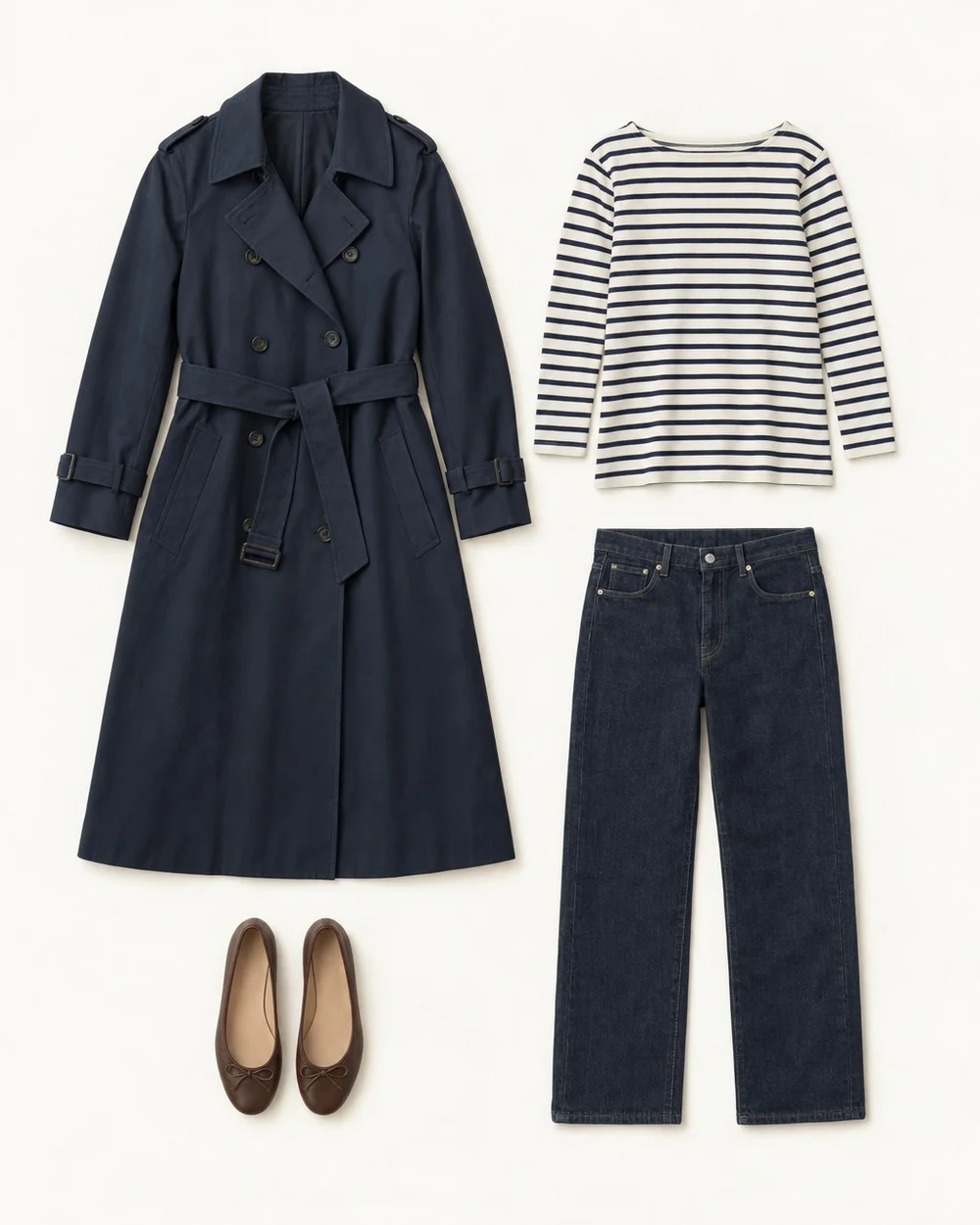
A personal uniform is a shortcut for assembling an outfit. It might be a loose shirt with straight pants, a dress with flat shoes, or jeans with a soft jacket. The useful part is the relationship between the pieces. You are choosing a starting point, with enough flexibility for your actual life.
Extract a formula from an outfit you already trust
Choose a recent outfit that felt comfortable and appropriate for most of the day. Describe it without brand names or exact colors. “Soft top, structured straight bottom, easy flat shoe” reveals more reusable information than “my blue shirt outfit.” Note which proportions or details matter to you, such as an untucked hem or an open neckline.
If you have no clear favorite, assemble one familiar combination and test it. You do not need a finished style identity before starting.
Define what the formula needs to do
List the recurring demands that your uniform must meet. Someone who sits at a desk and walks to transit needs different details from someone who stands, lifts, or wears protective equipment. Start with the applicable workplace or safety requirements, then add your preferences.
- Movement: sitting, reaching, walking, or standing.
- Practical details: pockets, washable pieces, shoe grip, or bag access.
- Presentation: the formality expected in your common settings.
- Comfort: fabric feel, waistband, layering, and temperature changes.
Build variations around stable relationships
Keep the feature that makes the original combination work, then change one variable. If you like a shorter top with a higher-rise bottom, another top does not need the same color but may need a similar effective length. Try the pieces together; clothing categories alone cannot predict how a combination will look or feel.
| Setting | Pieces | What stays consistent |
|---|---|---|
| Desk day | Fine knit, straight trousers, loafers | Soft top with a cleaner-lined bottom |
| Casual weekend | Cotton tee, straight jeans, sneakers | Similar volume and familiar shoe comfort |
| Cool evening | Long-sleeve top, trousers, short jacket, boots | Same base relationship with an added layer |
Swipe or scroll to read the full table.
Run a full-day test before making it your default
Wear one version on an ordinary day. Notice what happens after the first mirror check: does the shirt pull when you reach, do hems drag outside, or does the layer become awkward to carry? Record the specific issue. “Wrong uniform” is less useful than “this jacket restricts my arms over this knit.”
Adjust the individual piece first. A workable formula may only need a different shoe or a less bulky layer. Avoid buying duplicates until you know which details actually matter.
Keep an exception lane
A uniform should reduce routine decisions without becoming a rule for every event. Maintain a separate option for situations it cannot reasonably cover, such as a formal celebration or very wet weather. You can also step outside the formula simply because you want to.
Review it when your schedule changes. A formula designed for commuting may need different shoes or more washable tops during a new season of life. Keep what still serves you and change the demands that no longer fit.
Common questions.
How many uniforms should I have?
Start with one for your most frequent type of day. Add another only if a recurring activity has different needs, such as client visits versus physical errands. The number matters less than whether each formula solves a distinct dressing problem.
Does a personal uniform have to use neutral colors?
No. A consistent shape or combination can include bright colors and prints. For example, patterned shirts with solid trousers can be a uniform even when the shirts vary widely. Keep the relationships you enjoy and choose colors you actually want to wear.
Put your wardrobe to work.
Outfit Maker brings your own clothes, useful combinations and everyday plans together. Made for iPhone.
See how outfit planning works