 OUTFIT
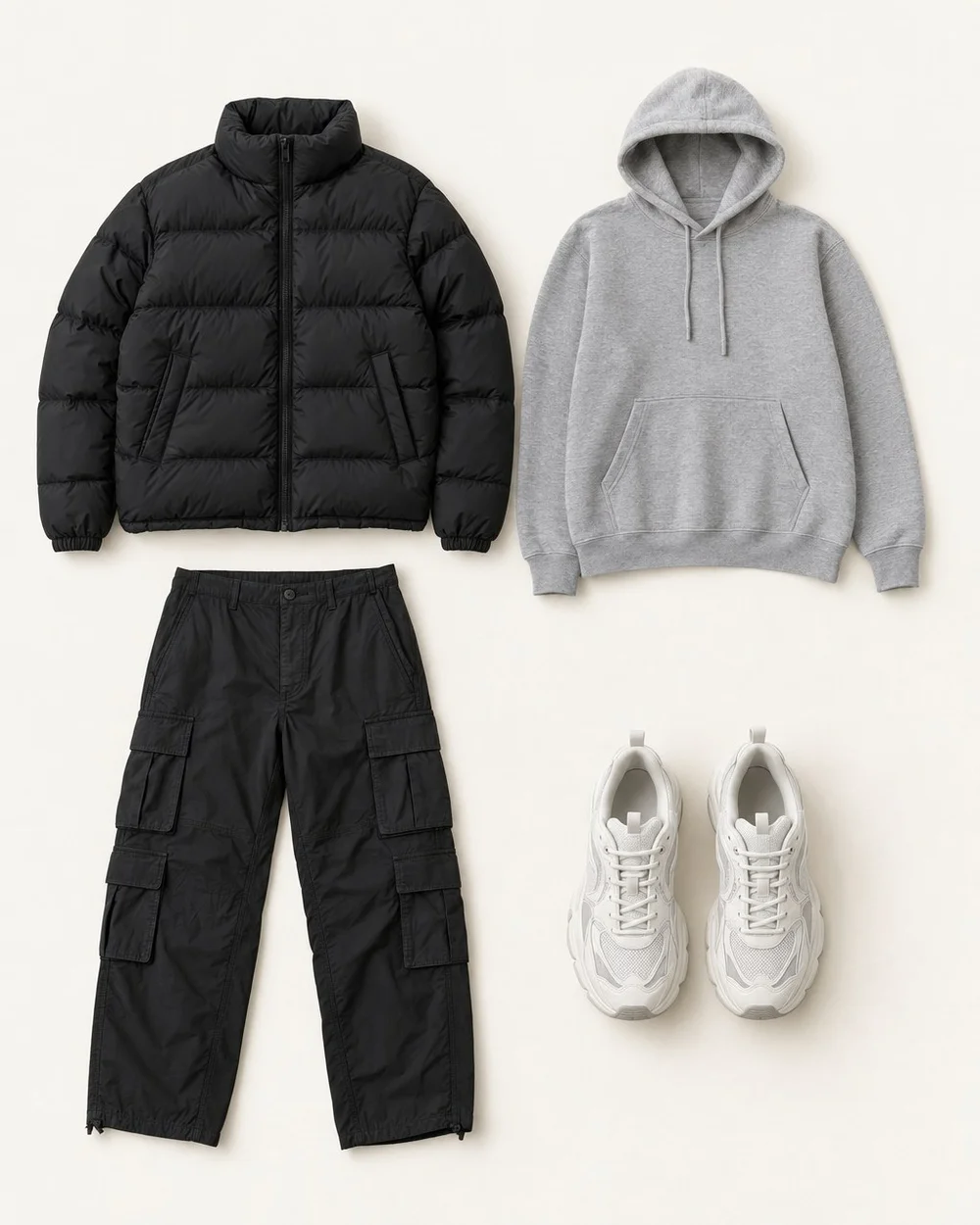
A convincing outfit image is not necessarily a usable plan. It may contain pieces you do not own, ignore tomorrow’s forecast, or suggest shoes unsuitable for your day. Understanding what you want the tool to decide makes it easier to evaluate suggestions and avoid confusing inspiration with preparation.
Separate an idea from a commitment
A generator can be useful when you want a fresh combination or a different way to use a familiar garment. Its output is a proposal. A planner becomes useful when you need to attach an outfit to a situation and ensure its components are ready. Neither label guarantees a particular product behavior.
For example, “try a striped shirt with olive trousers” is an idea. “Wear the confirmed striped shirt and olive trousers for Tuesday’s office day, with the rain jacket and walking shoes ready” is a plan. The second adds context and practical checks.
Check what the suggestions are made from
Some tools start with a catalog of your clothes; others work from a written description, inspiration image, or broader collection. Ask whether a proposed garment maps to a specific piece you own. If it does not, classify the result as inspiration rather than a ready-to-wear answer.
Even a tool using your inventory can have incomplete information. It may not know that a shirt is in laundry or that your trousers have been altered. Accurate inputs and easy corrections matter as much as the quality of the initial suggestion.
| Your need | What to check |
|---|---|
| New combinations | Can it suggest alternatives using existing pieces? |
| Tomorrow’s outfit | Can you record the day and occasion? |
| Owned clothes only | Can every proposed item be identified? |
| A usable plan | Can you review availability and practical constraints? |
| Less setup | Can you begin with a small confirmed collection? |
Swipe or scroll to read the full table.
Give useful constraints, then review the result
A specific request helps narrow the possibilities: “Use these trousers for an informal office day with a long walk; I prefer covered shoulders and no heels.” That tells the tool more than “make me look good” while leaving the final decision with you.
Inspect the suggested pieces, movement, temperature suitability, and degree of formality. If an output is visually appealing but misses a constraint, correct the constraint or reject the suggestion. A detailed explanation from a system is not proof that the outfit meets your needs.
Use the smallest workflow that closes the gap
If you already have reliable combinations but struggle on busy mornings, save those outfits and assign one to the next relevant day. You may not need generation. If your planning habit works but feels repetitive, experiment with one alternate pairing rather than rebuilding the entire system.
A manual version follows the same logic. Make a list of available pieces, propose two combinations, choose one for a real event, then prepare the clothes. Automation can assist individual steps, but the useful outcome is a wearable choice.
- Identify whether the problem is ideas, decisions, or preparation.
- Confirm the suggested garments are yours and available.
- Check the day’s conditions and requirements.
- Keep the successful combination for future use.
Common questions.
Can a single app be both a planner and a generator?
Yes. A product may propose combinations and also let you organize them for future use. Evaluate each capability separately, because a strong suggestion feature does not guarantee useful scheduling, and a good planner does not necessarily create new combinations. Current product descriptions should clarify the actual features.
Does an AI suggestion tell me whether clothes will fit?
An outfit suggestion should not be treated as a fit assessment. A photo or inventory record may omit measurements, alterations, comfort, and movement. Try on unfamiliar combinations and use your own fit knowledge. Keep any claimed fit-prediction feature separate from ordinary outfit generation when evaluating a product.
Put your wardrobe to work.
Outfit Maker brings your own clothes, useful combinations and everyday plans together. Made for iPhone.
Meet your personal AI stylist