 OUTFIT
Sunday planning works best when it answers a small question: what would make getting dressed easier this particular week? It does not need to reorganize your closet or settle your personal style. Use the clothes already in circulation and make a short, usable plan that reflects your appointments, movement, and energy.
Read the week before opening the closet
Look for the days that differ from your normal routine: an early train, a presentation, physical errands, dinner straight after work. Note the clothing requirement beside each event. “Walk to client office” is more useful than “Tuesday: smart.” It points to shoes, a presentable layer, and a bag you can carry comfortably.
Check a forecast as provisional information, then distinguish fixed constraints from changeable ones. An event dress code stays; a prediction of afternoon rain may move.
Plan around the hardest day first
Pick the most constrained day and build the entire outfit, including footwear and any visible layers. Try uncertain combinations together instead of trusting how they look on separate hangers. Then reuse a compatible piece on an easier day if its likely wear and care needs allow it.
For example, navy trousers might serve a Wednesday presentation with a shirt and jacket, then Friday desk work with a knit. Reserve another bottom for Friday if Wednesday involves a long, sweaty commute.
Do a readiness pass while the clothes are in front of you
An outfit is not ready merely because you own every piece. Check the parts that can derail the morning, and place repairs or care tasks outside the plan until they are complete. Follow garment care labels; do not assume every shirt can join the same wash.
- Check stains, closures, loose hems, and missing buttons.
- Confirm that the needed underwear, socks, and shoes are available.
- Steam or press only where the care label allows it.
- Set aside a replacement for anything still drying or awaiting repair.
Record options, not a rigid costume schedule
Take quick outfit photos or write combinations using recognizable item names. Keep the record where you normally look before getting dressed. A notes page is enough. Include a swap that preserves the purpose of the outfit instead of creating a completely new look.
| Day and need | Planned outfit | Useful swap |
|---|---|---|
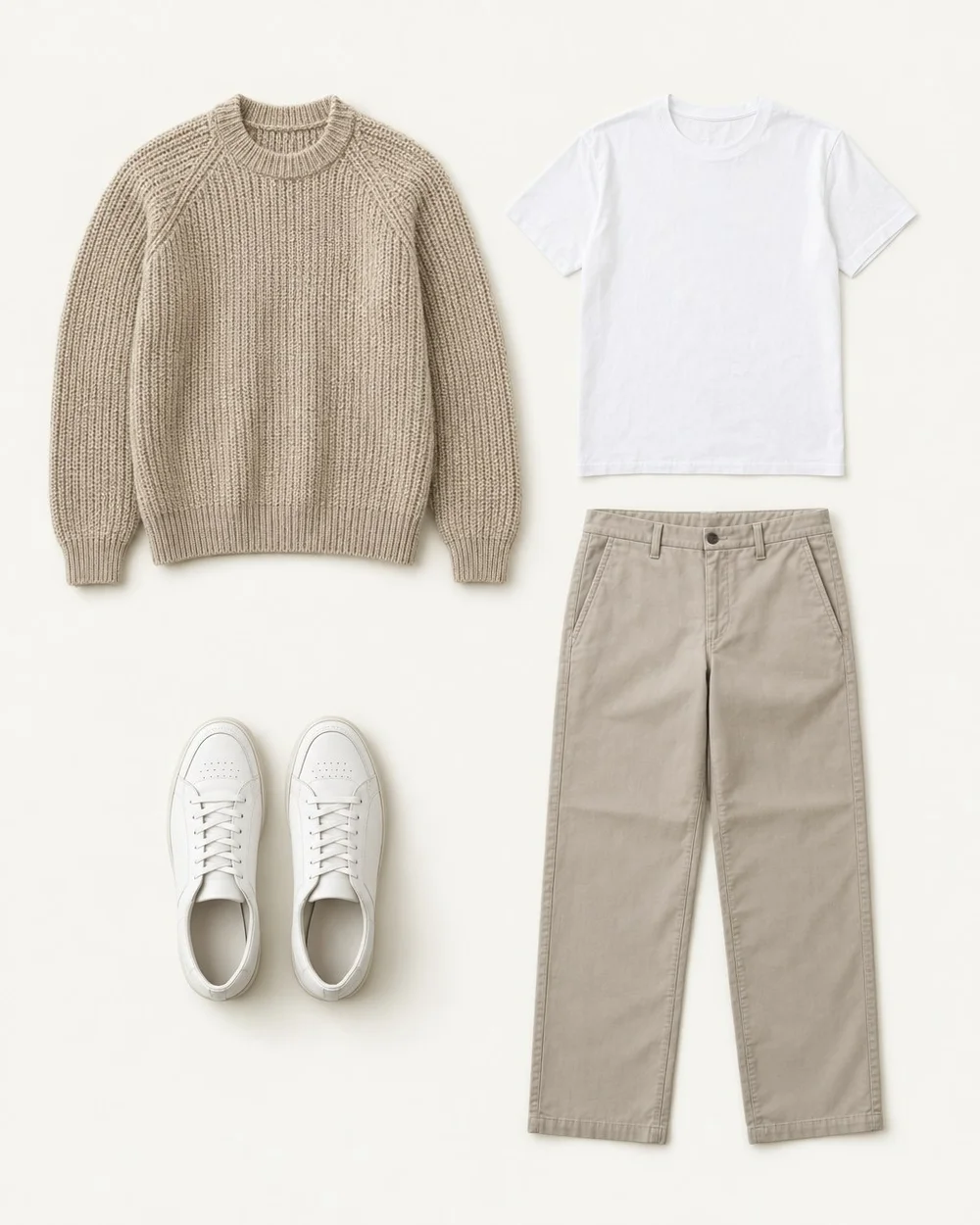
| Tuesday: commute and desk | Straight trousers, tee, cardigan, walking shoes | Water-resistant outer layer if rain develops |
| Wednesday: presentation | Navy trousers, shirt, jacket, loafers | Clean backup shirt in the same formality range |
| Friday: desk and errands | Navy trousers, knit, sneakers | Alternate trousers if Wednesday pair needs care |
Swipe or scroll to read the full table.
Leave one small decision for the evening before
Check the next day's forecast, your calendar, and the condition of any repeated item. Choose the outer layer and shoes then. If plans change, switch to the backup rather than rebuilding the whole week. On the following Sunday, keep combinations that helped and drop ones that felt like an obligation. The routine should become shorter as your reliable options accumulate.
Common questions.
What if I do not know my schedule for the whole week?
Plan the next two predictable days and prepare one flexible outfit for the rest. A clean top, comfortable bottom, and removable layer can cover several ordinary activities. Update the plan when an actual commitment appears rather than guessing at five different occasions.
Should I hang each outfit together?
You can, but shared pieces make five separate hangers awkward. Group the first outfit physically and photograph the others, or keep a simple written list. Leave garments stored in the way that protects their shape, especially knits that are better folded.
Put your wardrobe to work.
Outfit Maker brings your own clothes, useful combinations and everyday plans together. Made for iPhone.
See how outfit planning works