 OUTFIT
The best time to discover that your Tuesday trousers need washing is Sunday. A little outfit planning is less about dressing perfectly and more about leaving the house without trying on three different lives. Start with the week you actually have, then give each day something comfortable, appropriate, and ready to wear.
Start with the diary, not the hangers
Write down the five things your clothes need to do. Perhaps Monday includes a presentation, Tuesday is mostly at your desk, Wednesday means a long commute, Thursday ends with dinner, and Friday is informal. Check the forecast, too. An outfit that works at your desk can still fail on a wet walk to the station.
Choose a familiar silhouette for your most demanding day. Planning is useful precisely because you can save an untested combination for a quieter morning. There is no prize for making every outfit new.
Pull a ten-piece starting set
Here is one example for an office where smart separates are appropriate. It is a working set, not a shopping list. Swap every item for its closest equivalent in your closet: a relaxed jacket for a blazer, flats for loafers, or a second pair of trousers for the skirt.
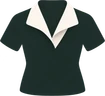
- 1. A white or pale shirt, comfortable enough to wear buttoned or open.
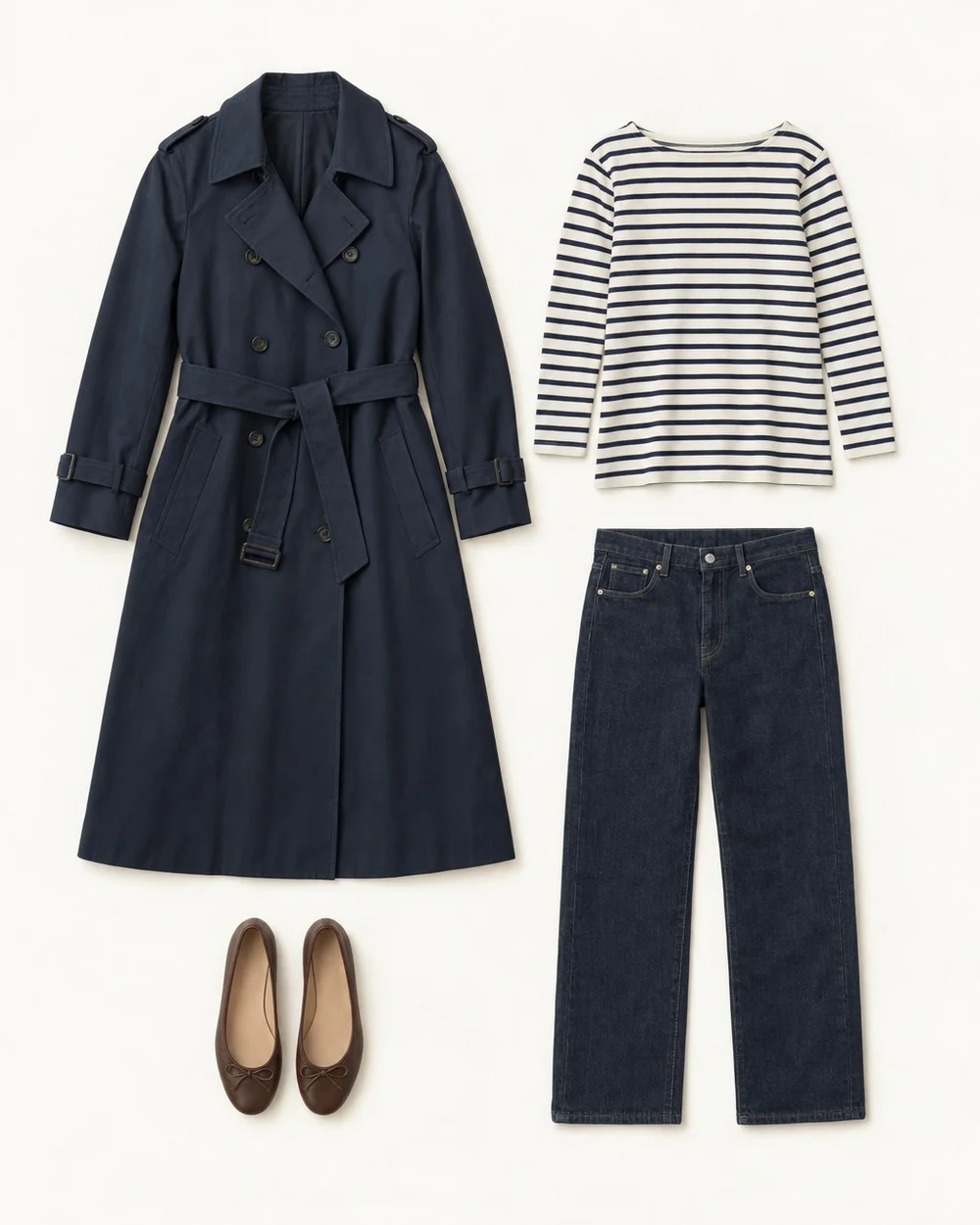
- 2. A striped lightweight knit.
- 3. A plain black crewneck top.
- 4. Navy tailored trousers.
- 5. Cream or light neutral trousers.
- 6. A dark midi skirt.
- 7. A navy or charcoal blazer.
- 8. A soft cardigan.
- 9. Comfortable loafers.
- 10. Clean trainers, if your workplace allows them.
Give each day a complete combination
Lay the combinations out, including shoes. The difference between an outfit idea and a useful plan is usually the last detail: a waistband that sits comfortably, a hem that clears the pavement, or a layer that fits over the sleeves underneath.
- Monday: pale shirt, navy trousers, blazer, loafers. Keep the shirt tucked or loose according to the proportions you like.
- Tuesday: striped knit, cream trousers, loafers. Bring the cardigan if you need an extra layer at your desk.
- Wednesday: black crewneck, navy trousers, cardigan, trainers. Use loafers instead if trainers are too casual for your day.
- Thursday: pale shirt, dark midi skirt, blazer, loafers. Rewear the shirt only if it is fresh; otherwise use a clean equivalent.
- Friday: striped knit, dark midi skirt, trainers. The familiar top takes on a different shape with the skirt.
Make repetition do the work
The trousers appear twice. So do the shirt, knit, skirt, and blazer. That is the point: a useful wardrobe lets you return to things you like. You can repeat an entire outfit, too. Change a detail because it suits the day, not because repetition needs disguising.
Photograph each combination once you have tried it on, or jot the pieces down in your notes. Include a useful observation, such as “shirt sleeves bunch under cardigan” or “trainers better for long walk.” Those small discoveries are more valuable next week than a beautifully styled photo with no context.
Leave room for real life
This ten-piece example does not count underwear, socks, a bag, jewellery, or weather-specific outerwear. Add what you need. A cold week may call for a coat and warmer shoes; a hot one may mean replacing the knit with a breathable top. A limited edit should never leave you uncomfortable.
Rewearing depends on the garment, the weather, and your own comfort. Check pieces after wearing and follow their care labels. If something needs washing, substitute a clean piece rather than protecting the count. Keep one reliable alternative ready for a spill or an unexpected meeting.
At the end of the week, keep the combinations you enjoyed and change the ones you avoided. Your next plan can begin with three proven outfits and two small experiments. That is enough variety to make getting dressed interesting without turning Sunday evening into another job.
Put your wardrobe to work.
Outfit Maker brings your own clothes, useful combinations and everyday plans together. Made for iPhone.
See how outfit planning works