 OUTFIT
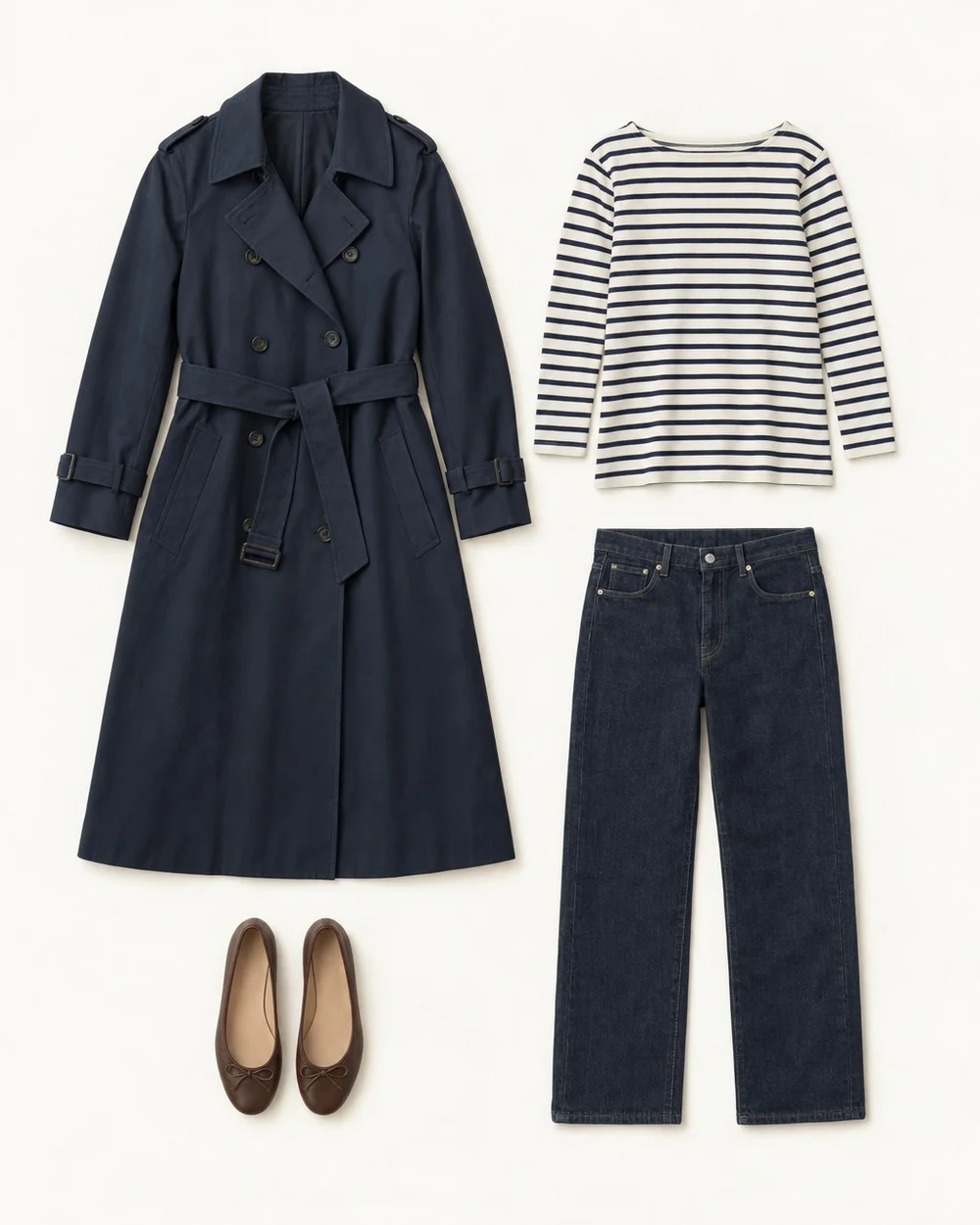
A daily high can describe an hour you spend inside a cold office. Meanwhile, your morning walk may be damp and much cooler. Weather planning becomes more useful when you translate a forecast into the parts of your day that involve actual exposure, then decide what you can remove, carry, or leave at your destination.
Map exposure instead of dressing for one number
Check a reliable local forecast for departure, lunch if outdoors, and your return. Note how long you expect to be outside and whether you will be walking briskly, standing still, or sitting. Your comfort can differ across these situations even at the same air temperature.
Also consider indoor heating or cooling, which the forecast cannot tell you. Use what you know about familiar buildings, and choose adaptable layers when the destination is uncertain.
Give each piece a job
Start with a base outfit you can comfortably wear indoors. Add insulation if needed, then protection from wind or rain suited to the forecast and your exposure. One garment may do more than one job, but a thick sweater does not automatically replace a rain layer.
Think through what happens when you remove a piece. If the base only works while covered, you may end up overheating rather than taking the layer off. Check the full outfit in its indoor and outdoor versions.
Compare a forecast with the actual schedule
Suppose the forecast is cool with drizzle at departure, mild at midday, and breezy after dinner. Someone driving door to door may make different choices from someone walking to transit. The example below assumes a walking commute and an indoor office, using clothing already owned.
| Part of day | Exposure | Useful response |
|---|---|---|
| Morning commute | Cool air and possible drizzle | Removable warm layer and rain protection |
| Afternoon at work | Mostly indoors, temperature uncertain | Comfortable base plus an easy layer |
| Evening walk home | Cooler air and wind | Carry or retain the protective outer layer |
Swipe or scroll to read the full table.
Choose shoes and hems for the route
Consider wet surfaces, puddles, muddy paths, or long stretches on foot before choosing footwear. Use shoes whose comfort and traction you already understand. A new combination is less useful if the trouser hem touches the ground or the shoes become uncomfortable before you reach your destination.
If you change shoes at work, check the hem with both pairs and plan how to carry the spare. Do not assume a shoe is waterproof because it looks sturdy; use known construction or maker guidance where that matters.
Build one forecast-change option
Keep the smallest swap that handles the plausible change: a different outer layer, closed shoes, or an extra knit. Check the latest forecast before leaving and choose then. Avoid packing multiple complete outfits for an ordinary day when one useful adjustment will do.
- Can every removed layer fit in the bag or be carried comfortably?
- Does the base work on its own indoors?
- Are the shoes suitable for the planned route?
- Does any garment need to dry before its next planned wear?
- Would official severe-weather guidance require changing the outing itself?
Common questions.
Should I use fixed temperature rules for clothing?
Use them only as your own starting notes. Wind, rain, activity, fabric, and personal comfort all affect what feels suitable. A short record of what worked for a similar day can be more useful than somebody else’s universal temperature chart.
How can I plan several days ahead when forecasts change?
Choose the base outfits around your schedule, then leave outer layers and weather-sensitive footwear provisional. Review the next day the evening before and again if conditions shift. Keep one compatible alternative instead of trying to predict every possible forecast.
Put your wardrobe to work.
Outfit Maker brings your own clothes, useful combinations and everyday plans together. Made for iPhone.
See how outfit planning works