 OUTFIT
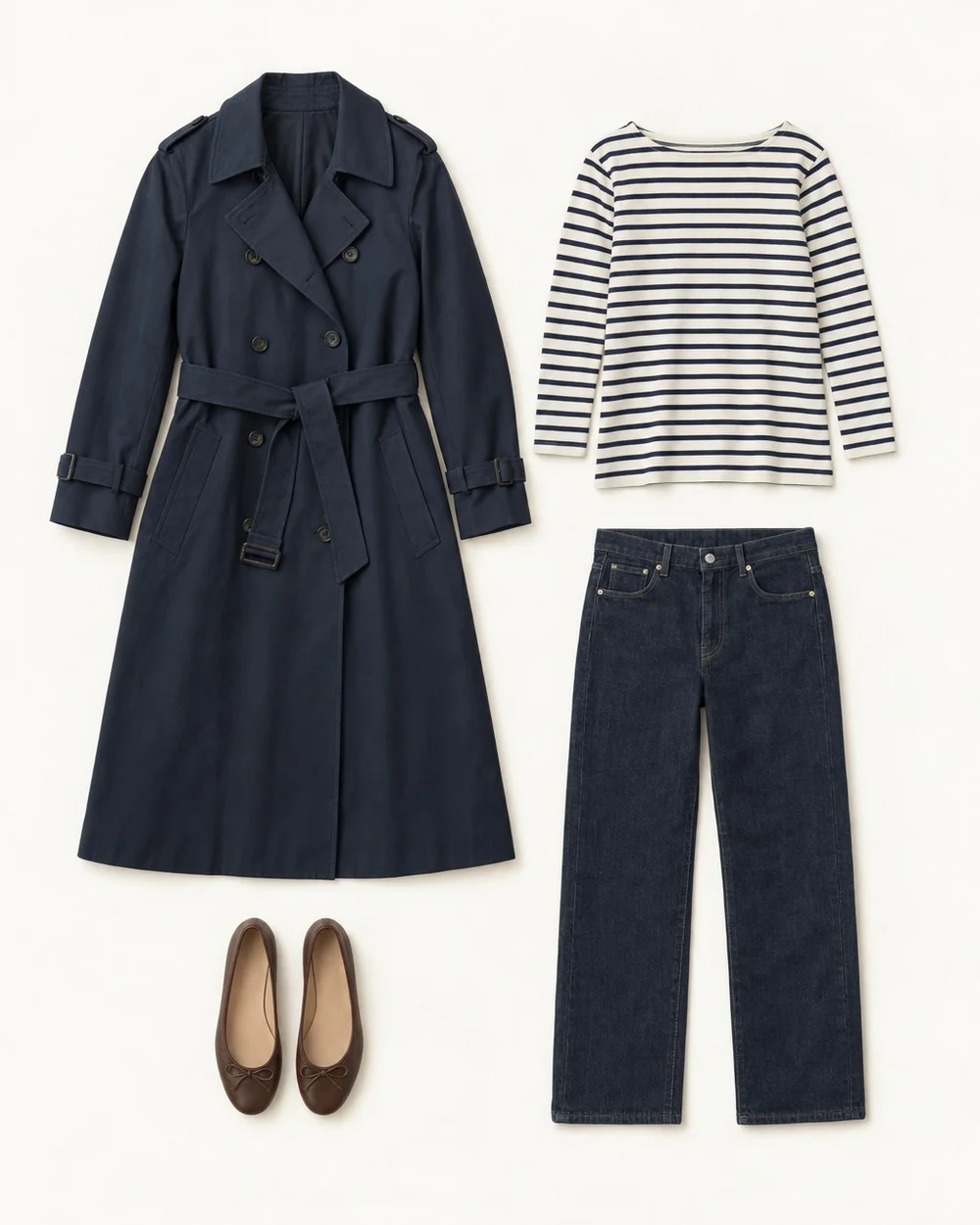
A seasonal rotation should make the active closet easier to use without creating a second wardrobe you forget exists. You do not need to pack away every trace of the previous season. Keep the clothes that still solve real dressing problems and move only what is genuinely out of the current rotation.
Define the active season through your week
Look at your local conditions and the places you spend time. A heated office, a cool evening commute, and a warm afternoon may all appear in the same week. Your active wardrobe needs to cover that range rather than match a single seasonal image.
Sort into three practical groups: use now, useful bridge, and store. Bridge pieces might include a cardigan, a light jacket, or trousers that work across temperatures. If a garment remains in frequent use, its fabric or color does not obligate you to store it.
Prepare outgoing clothes before storage
Check pockets, fastenings, hems, and visible damage. Clean each item according to its care label and let it dry completely before putting it away. Handle any specialist storage needs according to garment guidance, especially for delicate, structured, or embellished pieces.
Make repair decisions while the issue is visible. A coat with a loose fastening is easy to forget once it is inside a storage bag. Keep an unresolved repair out of the ready-to-wear count, even if you choose to store it temporarily with a clear note.
| Check | Action |
|---|---|
| Pockets | Remove belongings and loose debris |
| Care | Follow the label and dry fully |
| Condition | Record or arrange necessary repairs |
| Shape | Choose storage that avoids unnecessary strain |
| Location | Assign a labeled container or closet area |
Swipe or scroll to read the full table.
Store for retrieval, not just for compactness
Group items in a way that makes the next search predictable. You might use cold-weather knits, warm-weather bottoms, and occasion clothing rather than one large box labeled “seasonal.” Record the container location in a note or inventory if you use several storage areas.
For example, keep a light sweater near the top of a transition box instead of under all the heavy coats. If your weather changes quickly, the ability to retrieve one useful layer matters more than achieving the tightest possible packing. Avoid overfilling storage so much that accessing a piece becomes a project.
Bring clothes back through a readiness check
When the season changes, inspect stored pieces before assigning them to outfits. Check condition, comfort, and whether they still work with your current shoes and layers. A garment may be intact but no longer suit the way you spend your days.
Try a few complete outfits as items return. If something needs cleaning, repair, or a new pairing, record that before it disappears into the active closet. Rotate gradually when conditions remain mixed; there is no requirement to finish the entire swap on one weekend.
- Keep a small set of bridge pieces accessible.
- Label containers with contents and location.
- Record unfinished repairs beside stored items.
- Review fit and condition before planning a returned piece.
- Update the active wardrobe record after moving clothes.
Common questions.
Do I need seasonal storage if I have enough closet space?
No. You can rotate visibility instead: move current pieces to the easiest section and keep less relevant items farther back. The goal is simpler retrieval. If you can already see and use your wardrobe comfortably, physical storage may add work without solving a problem.
Should I declutter while rotating clothes?
You can note clear decisions, but rotation and decluttering are different tasks. A garment being out of season is not a reason to release it. Set uncertain pieces aside for deliberate review rather than making rushed decisions while you are trying to finish packing and restore the room.
Put your wardrobe to work.
Outfit Maker brings your own clothes, useful combinations and everyday plans together. Made for iPhone.
Explore your digital closet