 OUTFIT
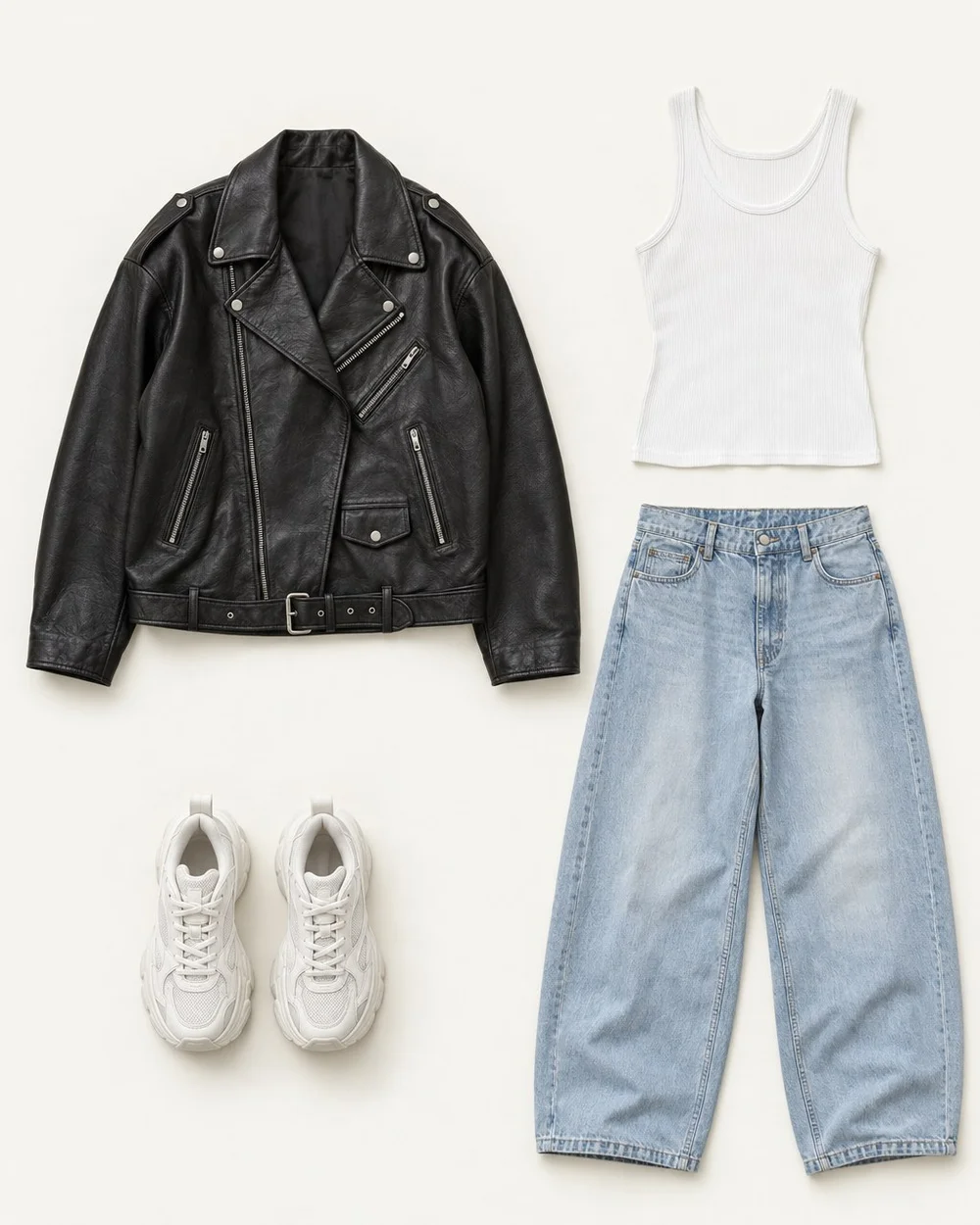
A useful capsule is a plan for your trip, not the smallest possible pile of clothes. Begin with the days, activities, and conditions you expect. The example below assumes a seven-day mild-weather trip with casual sightseeing, two informal dinners, and access to a suitable wash midway through the stay.
Count the clothing you actually take
This example contains nine main clothing pieces and two pairs of shoes. One outfit and one shoe pair are worn in transit; the rest go in the bag. The count excludes underwear, socks, sleepwear, toiletries, electronics, and any specialist activity gear, which still need space.
Choose four tops that work with both bottoms. Use a dress if you enjoy one, or replace it with a third bottom; the clothing count stays nine. The two layers might be a cardigan and a light outer jacket, but change them for the actual weather rather than assuming mild conditions everywhere.
| Category | Count | Example |
|---|---|---|
| Tops | 4 | Two T-shirts, shirt, fine knit |
| Bottoms | 2 | Pants and jeans |
| Dress or extra bottom | 1 | Midi dress or third bottom |
| Layers | 2 | Cardigan and light jacket |
| Shoes | 2 pairs | Walking pair and dinner-appropriate pair |
Swipe or scroll to read the full table.
Map outfits before putting them in the bag
Write seven day slots plus the two dinners. Use the same pants with different tops and let the dress, or alternate bottom, cover dinner where suitable. Repeat outfits deliberately: a seven-day trip does not require seven different bottoms.
For example, travel in pants, T-shirt, cardigan, and walking shoes. Use jeans with a shirt the next day, pants with the knit on day three, then wash the appropriate tops after day three or four. Keep one clean top available while laundry dries. Plan dinner with the dress and cardigan, or shirt and pants, depending on the setting.
Make the laundry assumption explicit
Check whether you can wash and fully dry the chosen garments. A washing machine is not enough if there is no usable drying time. Follow care labels and avoid making the entire plan depend on a delicate top being ready the next morning.
If laundry is unavailable, reassess the tops, underwear, socks, and sleepwear instead of simply declaring the same capsule sufficient. Rewear only garments that remain comfortable and clean for you. Carrying an extra top may be more useful than adding another pair of shoes when your main risk is sweaty daytime clothing.
Rehearse the packing volume
Lay out the complete inventory, including items outside the capsule count. Put everything in your actual bag and check it against your carrier’s current dimensions, weight, and allowance. A clothing list cannot guarantee that every airline or fare permits the same bag.
Walk in the travel outfit and test both shoe pairs before leaving. Keep medication, essential documents, and other personally necessary items accessible according to your needs. Remove items that duplicate a function, but do not remove weather protection or required event clothing merely to meet an arbitrary garment total.
Common questions.
Does a one-week capsule need a dress?
No. Replace the dress with another bottom if that better fits your wardrobe and activities. Confirm that the resulting tops and bottoms can cover the dinners or other occasions on the itinerary. The example’s nine-piece clothing count remains the same with either choice.
Can I use this plan without doing laundry?
Possibly, depending on climate, activities, and your own rewear preferences. The example assumes one wash, so do not copy it unchanged if that is unavailable. Plan clean underlayers and enough tops for the trip, and test the extra volume in your actual bag.
Put your wardrobe to work.
Outfit Maker brings your own clothes, useful combinations and everyday plans together. Made for iPhone.
See how outfit planning works