 OUTFIT
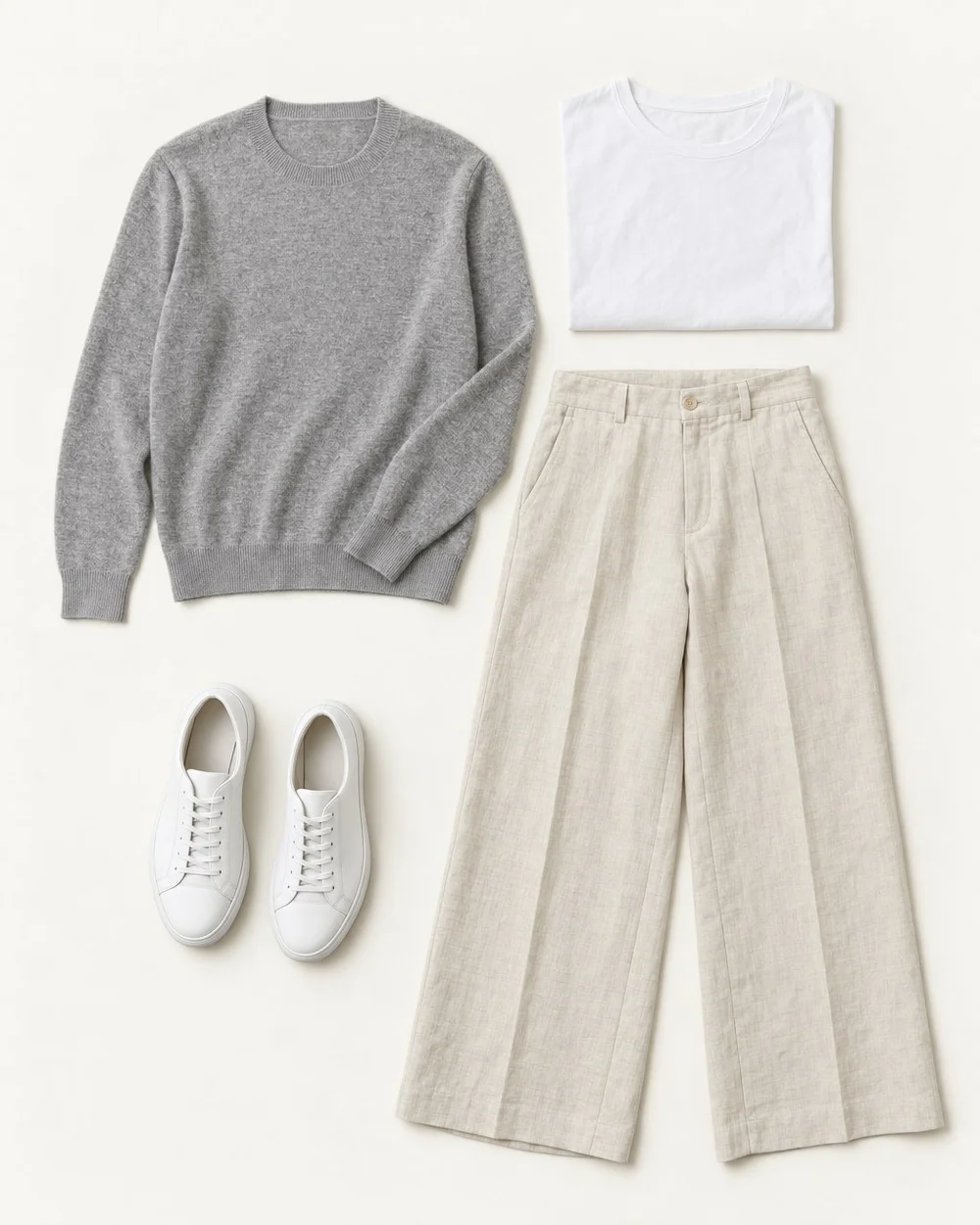
Numbers such as 20 or 30 can make a capsule sound simple, but the same count can describe very different wardrobes. One may include shoes and coats; another may exclude both. Treat the number as a summary of a working system, not the rule that decides whether your wardrobe is successful.
Set the boundary before counting
Choose the period and purpose: an everyday capsule for the current season, a work-only collection, or a travel capsule. State whether shoes, outerwear, accessories, exercise clothes, sleepwear, underwear, and occasion clothing are included. Without those boundaries, comparisons are not very informative.
Start from the clothes you already reach for. A capsule does not require identical colors or a strict personal uniform, but its pieces should make usable combinations for the defined purpose. An excellent winter coat does not solve a summer office problem merely because it counts as a versatile item.
Work backward from the week you actually have
Map the situations that need different clothes. Consider how much reuse feels comfortable, whether garments air or clean adequately between wears, and how often laundry is realistically available. Check care labels rather than assuming everything can join the same wash.
Someone who wears a separate work outfit daily and exercises often may need different quantities from someone whose clothes cover both home and casual meetings. Layer changes, spill risk, and drying time also affect capacity. The right count emerges from those conditions, not from a universal ratio of tops to bottoms.
Use a counted example as a starting point
Consider an adult building a casual-to-office capsule for a mild season, with weekly laundry and no formal events in the capsule’s scope. The 18-piece example below includes footwear and outerwear. Underwear, socks, sleepwear, exercise gear, bags, jewelry, and event-specific clothing are separate; they still need appropriate capacity.
The two light layers are assumed to fit under the outer layer, and the shoes must suit the person’s actual walking and workplace needs. If those assumptions fail, change the collection rather than preserving the number.
| Category | Count | Role |
|---|---|---|
| Tops | 6 | Enough rotation between laundry opportunities |
| Bottoms | 4 | Options for casual and office days |
| Light layers | 2 | Adjustable indoor and outdoor comfort |
| One-piece outfits | 2 | Independent complete outfit bases |
| Outer layer | 1 | Appropriate protection for the season |
| Shoes | 3 | Cover the actual activities |
| Total | 18 | Counts the categories above only |
Swipe or scroll to read the full table.
Test capacity before editing further
Wear the capsule through a normal week while keeping the rest of your wardrobe available. Note why you reach outside it. A missing rain layer indicates a practical gap; wanting a different color may indicate a variety preference. Both observations are valid, but they suggest different adjustments.
Remove a piece only when the remaining collection still covers its role. Add one when it solves a repeated problem rather than merely making the total look balanced.
- Check every bottom has a usable top and shoe pairing.
- Check layers work together physically.
- Identify the first category likely to run out before laundry.
- Keep a realistic option for spills or delayed cleaning.
- Reassess after an ordinary week, not just a try-on session.
Common questions.
Do duplicates count as separate capsule pieces?
Yes, when the number describes physical garments. Two identical tees provide two clean-wear opportunities, even if they create the same visual outfit. State duplicates explicitly. They can be useful for a personal uniform or laundry capacity, rather than being a failure of capsule planning.
Is a smaller capsule always more sustainable or economical?
The count alone cannot establish that. A tiny collection may create frequent laundering or push you to replace heavily used items sooner; a larger one may contain clothes you already own and use. Focus on useful wear, suitable care, and avoiding unnecessary purchases rather than treating a low number as proof of a benefit.
Put your wardrobe to work.
Outfit Maker brings your own clothes, useful combinations and everyday plans together. Made for iPhone.
See how outfit planning works